Pecan Bayou BESS Project
Gross CapEx
$7.32 M
Fixed Revenue (Yr 1-10)
$774,000
Equity IRR
13.6%
NPV (at 8%)
$1.53 M
I. Project Basic Information
- Project Name: Pecan Bayou BESS (10 MW / 20 MWh Standalone Battery Energy Storage System).
- Location: Clyde, Callahan County, Texas (ERCOT Grid, West-Central Texas BESS Corridor).
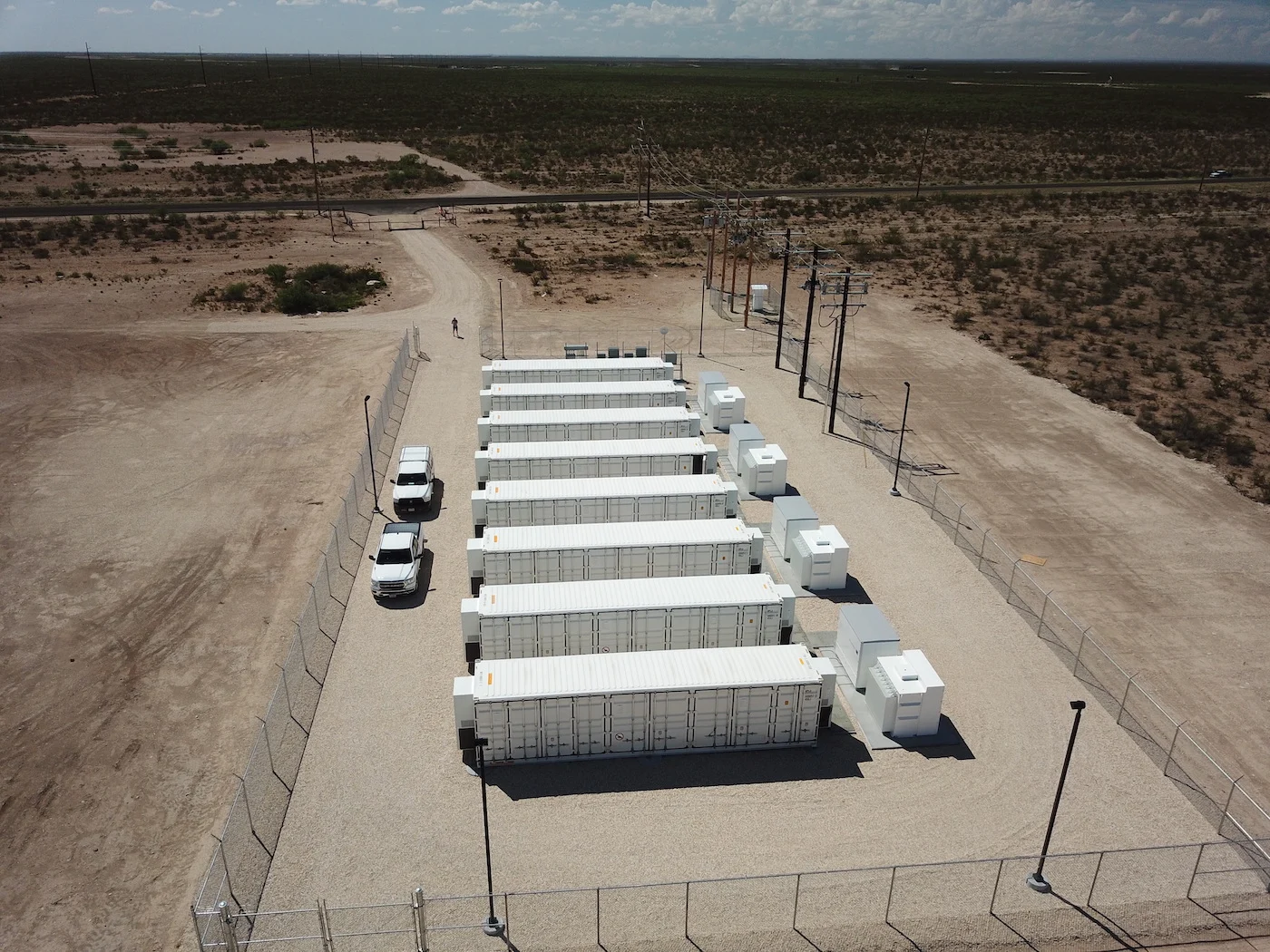
- Scale & Technology: A 10 MW / 20 MWh (2-hour duration) storage facility utilizing Trina Elementa G2 Pro LFP (Lithium Iron Phosphate) technology across 6 battery containers (25.1 MWh DC capacity).
- Offtaker: AXPO (AXPO US LLC), a large, established European energy trading and generation group with an A-range credit profile.
- Developer: Jenix Energy (Presidio Power Company).
- Site Control: A 20-year lease option has been executed. The site is located in Callahan County, a "permit-by-right" jurisdiction requiring no zoning or building permits, eliminating years of entitlement risk.
📸 Project Site Images
📍 Google Map Information
II. Profit Logic
The core strategy anchors the project on a highly predictable contract for the debt period, followed by pure merchant upside:
- Phase 1: AXPO Full-Toll Contract (Years 1–10): AXPO pays a fixed toll of $774,000 per year ($6.45/kW-month) for the right to dispatch the battery. This structure shifts dispatch, price, and market-timing risks entirely to AXPO, guaranteeing predictable revenue regardless of ERCOT market volatility.
- Phase 2: Self-Operated Merchant (Years 11–20): After the debt is paid down and the toll term ends, Jenix assumes dispatch control to capture energy arbitrage and ancillary services in ERCOT. This phase capitalizes on structural electricity growth driven by AI data centers, LNG exports, and industrial reshoring in Texas.
- Federal Tax Shields (ITC): The project qualifies for a 30% Federal Investment Tax Credit (ITC) under the Inflation Reduction Act. This credit can be transferred (sold) to generate approximately $2.2M in Day-1 cash, significantly reducing the effective capital cost.
III. Investment Calculation
- Total Gross CapEx: $7,319,486.
- Net CapEx (after 30% ITC): $5,123,640.
- Senior Debt: $2,927,794 (10-year term modeled at 6.5% interest, representing ~57% of net CapEx).
- Equity Required: $2,305,638.
- Annual Fixed Revenue (Years 1-10): $774,000 per year (generating consistently positive EBITDA of $560k–$604k annually).
- Return Metrics (10-yr AXPO + Base Merchant Case):
- Project IRR (Unlevered): 12.0%.
- Equity IRR: 13.6%.
- NPV (at 8%): $1.53M.
- Stress Case Resilience: Even in a conservative downside scenario for the merchant period, the project yields a positive NPV ($317k) and a 9.4% equity IRR because the debt is fully serviced by the fixed AXPO contract.
IV. Project Cycle
The project has successfully cleared major entitlement hurdles and is approaching the construction phase:
- Completed Milestones: 20-year lease option signed (Feb 2026); AEP Texas interconnection pre-screen filed; indicative term sheet received from AXPO.
- Current Phase: Advancing to financial close, securing the firm EPC contract, and converting the AXPO term sheet into a binding Definitive Agreement (Targeted Q3 2026).
- Construction Commencement: Targeted for October 2026.
- Commercial Operation Date (COD): Targeted for April 2027, triggering the start of AXPO toll revenue.
- Asset Lifespan: 20+ years (6,000+ cycles) with a planned capital reserve for battery augmentation in Year 7.
📅 Project Implementation Timeline
Completed Milestones
Entitlements & Lease Secured: 20-year lease executed (Feb 2026). AEP Texas interconnection screening filed, and AXPO indicative term sheet received.
Current Phase
Financial Close & EPC Contracting: Finalizing AXPO Definitive Agreement and turnkey EPC procurement contracts (Targeted Q3 2026).
October 2026 (Targeted)
Construction Commencement: Civil site work, pad foundations preparation, and container BESS placement starts.
April 2027 (Targeted)
COD & Operations Start: Commercial Operation Date (COD) commissioning completes, triggering AXPO fixed toll inflows.
V. Risk Points & Mitigation Mechanisms
- AXPO Agreement Execution Risk: The current pricing is indicative. Mitigation: Financial close is strictly conditional on the execution of the binding AXPO Definitive Agreement on lender-approved terms. Investors are not exposed to a purely merchant project on Day 1.
- Interconnection Charge Constraint: An early AEP pre-screening flagged an available charge capacity of 4.98 MW against the 10 MW needed. Mitigation: A formal full interconnection study will confirm final capacity or identify network upgrade options. Furthermore, ERCOT's multi-hour, low-price night windows allow for a slower charge rate without materially hurting arbitrage economics.
- Battery Degradation: Battery capacity naturally declines over time. Mitigation: A dedicated augmentation budget ($576k) is fully modeled for Year 7. Additionally, Trina provides a 20-year performance warranty covering capacity retention.
- ITC / FEOC Eligibility Risk: Potential disqualification for the tax credit due to Foreign Entity of Concern (FEOC) rules. Mitigation: The selected supplier (Trina) presents a lower FEOC risk. A formal tax counsel opinion is required prior to financial close, and tax insurance is available to backstop the credits.
- Post-Toll Merchant Risk: Exposure to ERCOT market pricing in Years 11-20. Mitigation: The project’s debt is sized exclusively on the 10-year AXPO toll and will be fully amortized by Year 10. The merchant period represents unencumbered upside, and the project still clears hurdle rates even in heavily stressed post-toll scenarios.